

By Mark Scicluna - Technical Advisor, Conduct Supervision, MFSA
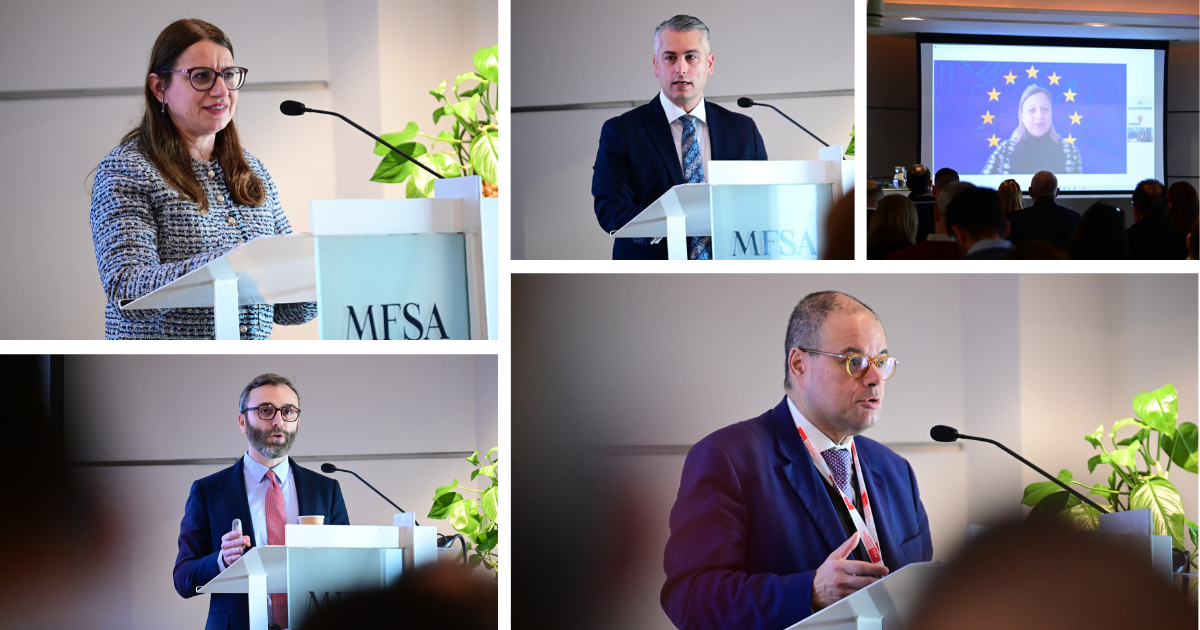
Malta may be one of Europe’s strongest savers, but are we truly making our money work for us? That question set the tone for the MFSA’s workshop on 19 February 2026, where experts from the OECD unveiled the first findings of a nationwide survey examining the behaviours and attitudes of over 1,500 existing and potential retail investors aged 16 - 79. Held under the EU-funded Technical Support Instrument (TSI) project which brings together the MFSA, the European Commission – SG REFORM, the OECD, and the Ministry for Finance of Malta, the session offered a rare, data-driven look beneath Malta’s strong saving culture.
The preliminary results highlight where confidence is high, where knowledge falls short, and where opportunities for financial empowerment are emerging.
One of the most striking, though perhaps unsurprising, early findings is the contrast between Malta’s high saving rate and its relatively limited engagement with investment products. In 2024, Malta recorded the third-highest household savings rate in the EU, reflecting a strong culture of putting money aside. Yet the survey shows that this discipline rarely translates into long-term investing.
In fact, while 73% of respondents deposited money into a savings account over the previous 12 months, only 27% invested in financial instruments such as shares, bonds, mutual funds, or ETFs. This gap suggests that although Maltese households save consistently, many may be missing opportunities to compound their wealth over time.
Another interesting insight revealed during the workshop was that among those who do invest, participation in capital markets tends to be narrow. A remarkable 80% of investment holders report owning just one or two financial products. Portfolios are frequently clustered around familiar assets, primarily shares and bonds, while more diverse products are far less commonly held.
This limited diversification hints at a cautious approach to investing, with individuals relying on what they know rather than exploring a broader mix of asset classes that could better manage risk and enhance returns.
The survey also uncovers meaningful gaps in financial understanding. While respondents generally grasp basic concepts such as simple and compound interest, knowledge becomes less robust when it comes to more technical topics, particularly those relating to bonds.
Common misunderstandings include:
- How interest rate movements affect bond prices
- The meaning of “yield to maturity”
- The misconception that “guaranteed” bonds ensure full recovery of capital.
Surprisingly, these misconceptions are widespread even among bondholders.
Preliminary results further show that the most common reasons adults give for not investing include:
- Fear of losing money (36%)
- Lack of disposable income (36%)
- Not knowing how to invest (20%)
- Preference for real estate (22%)
Qualitative interviews further reveal that younger adults (aged 18-25) often prioritise liquidity and short-term financial goals, while older adults cite time constraints and limited confidence in capital markets. These insights reveal a clear need for more tailored and accessible financial education that addresses both knowledge and emotional barriers to investing.
For those who do participate in capital markets, trusted sources of information play a decisive role. Nearly half of investment holders rely on independent financial advisors, while one-third make decisions through online platforms.
There are notable differences across investor types:
- Share and bond holders tend to rely heavily on formal documentation, such as prospectuses
- Crypto investors, who represent 17% of respondents that invest, are more likely to turn to peers, family, and online influencers.
Encouragingly, a large majority report checking whether a provider is authorised by the MFSA before investing, an important sign of growing attention to regulatory safeguards and consumer protection.
The survey’s preliminary findings point to significant opportunities for strengthening financial capability across Malta. Strong savings habits provide a solid foundation, but the data clearly shows that investment literacy, diversification, and long-term planning remain areas where many consumers would benefit from clearer guidance and support.
With younger adults expressing uncertainty about how to invest, and women and lower-income households displaying lower literacy levels, tailored initiatives could make a meaningful difference.
As the OECD prepares its full analytical report for release in early 2027, these preliminary insights will inform ongoing efforts by the MFSA and other national stakeholders to empower people across all demographics to make informed, confident, and forward-looking financial decisions.
