
The MFSA has recently launched a new Public-Private Partnership (PPP) on Fraud Detection and Prevention, aimed at strengthening the detection, prevention and disruption of financial fraud through enhanced national coordination. Bringing together key public authorities and leading financial institutions, the initiative represents a significant step in addressing increasingly sophisticated fraud risks affecting both consumers and the wider financial system.
Permanent members include the MFSA, Malta Police Force, Office of the Arbiter for Financial Services, Financial Intelligence Analysis Unit, and the Central Bank of Malta. While the non-permanent private sector members include the Malta Bankers’ Association and local credit institutions providing retail payment services. Since its launch, the Partnership has convened three meetings between April and June 2026 at the MFSA.
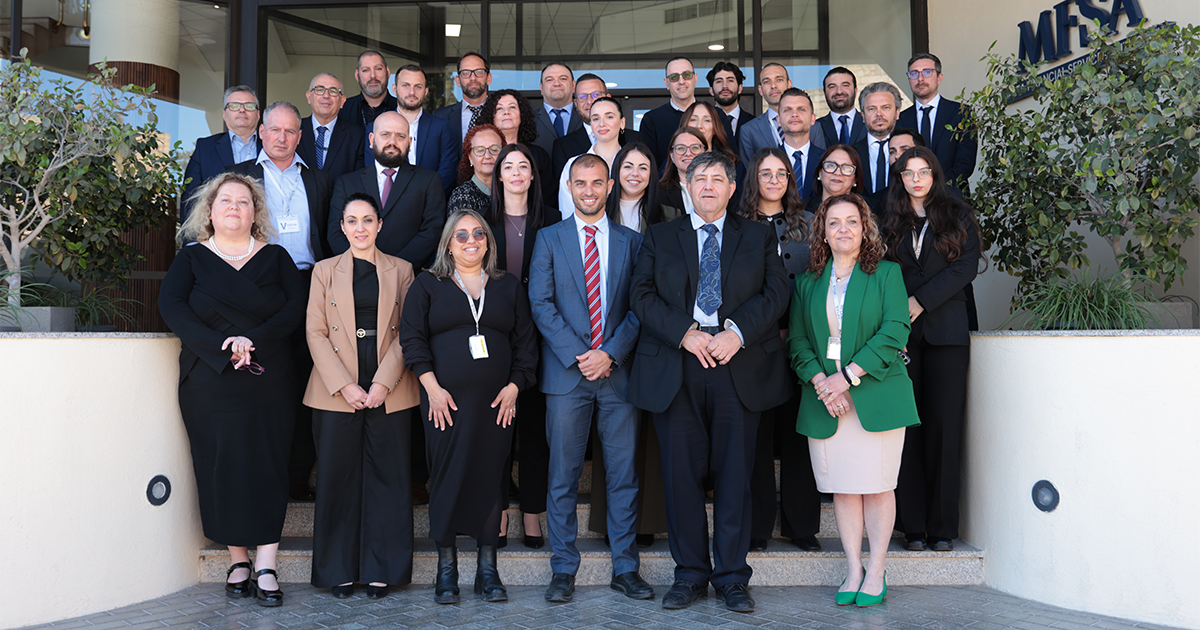
Led by the MFSA’s Financial Crime Compliance function, the Partnership establishes a structured framework for cooperation, enabling systematic sharing of insights on fraud typologies, emerging trends and sector vulnerabilities. To achieve its objectives, the Partnership is intentionally structured around four core pillars namely:
- The sharing of fraud typologies, emerging trends, best practices and lessons learned;
- Enhanced cooperation and coordination across regulators, law enforcement and the private sector;
- A strong focus on guidance and outreach to build capability and promote consistent application of good practices; and
- Support for policy development together with targeted, risk focused supervisory engagement to ensure the response evolves with emerging fraud risks.
Several important themes have emerged from discussions held to date during the Partnership’s meetings. Fraud ultimately targets individuals, exploiting behaviour, trust and decision-making. As such, informed and vigilant customers remain the most effective line of defence. Strengthening consumer awareness, confidence and education is therefore essential, not only to protect individuals, but also to safeguard the resilience of the wider financial system.
The discussion also highlighted the increasingly sophisticated and behavioural nature of fraud. Modern fraud schemes frequently rely on psychological manipulation rather than solely on transactional vulnerabilities, exploiting urgency, familiarity and perceived legitimacy. This shift highlights the need for adaptive, forward-looking mitigation frameworks that evolve alongside emerging threats.
Another Key theme has been the importance of timely and trusted information sharing . Effective collaboration between stakeholders remains critical to both prevention and recovery efforts. In many cases, speed plays a decisive role, with even short delays significantly reducing the likelihood of successful intervention.
These discussions take place against a rapidly evolving regulatory and risk landscape. Upcoming EU measures will introduce enhanced monitoring and data-sharing obligations, underscoring the need for more coordinated and proactive responses to complex, cross-border fraud risks. At the same time, the international dimension of fraud continues to expand, with large-scale organised operations operating across multiple regions and jurisdictions. This growing global reach highlights how developments beyond national borders can have direct local impact. In this context, Malta’s role as an internationally active financial services centre calls for a response that is both cohesive and forward-looking, aligned with the scale and sophistication of the evolving threat.
The Partnership is already delivering on its objectives by strengthening collaboration, identifying gaps and enhancing resilience.
